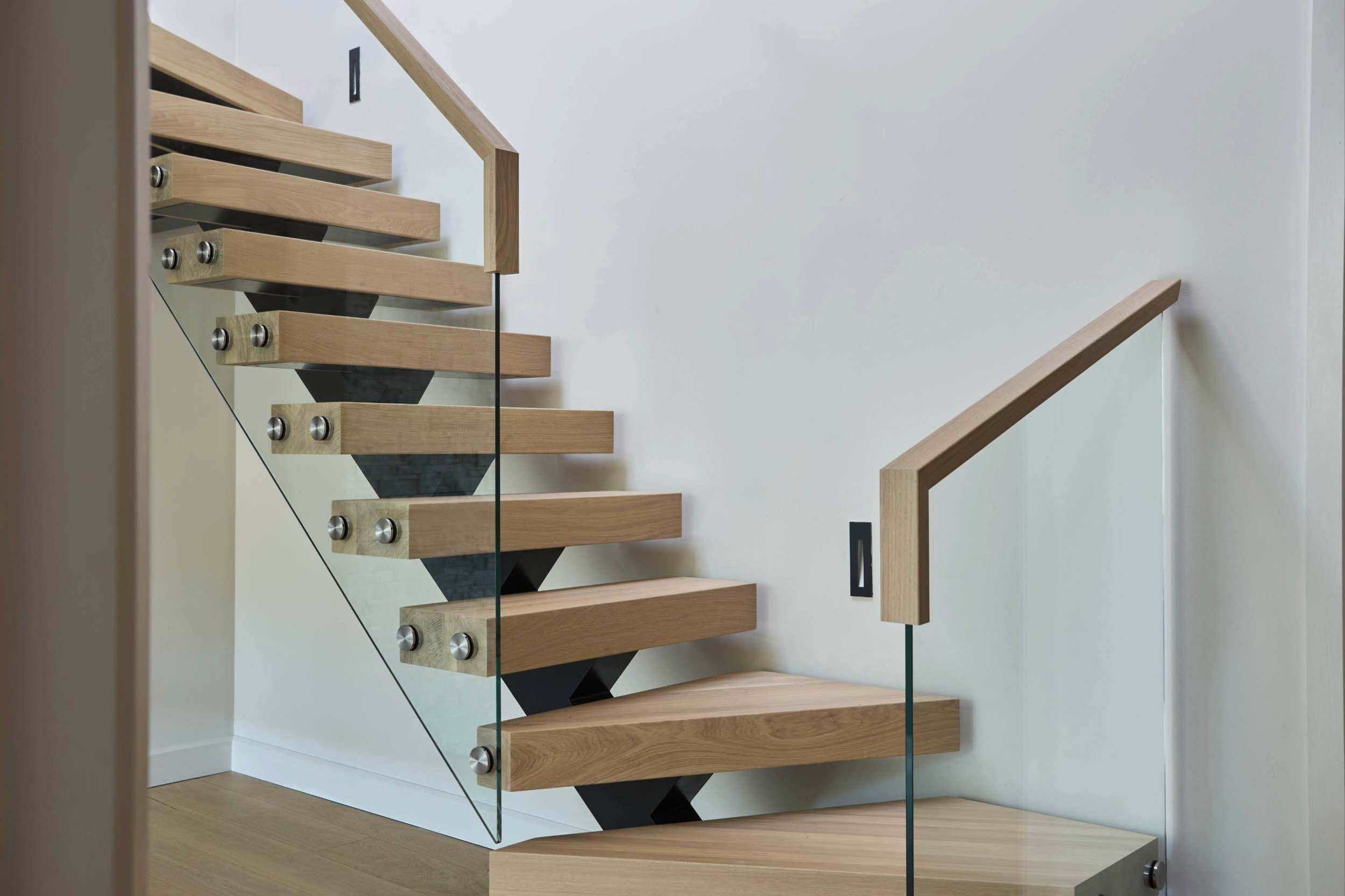
■ Style details
.jpg)
Best paired with extra-thick hardwood treads for added elegance, the Flux Floating staircase is designed for easy assembly with no wall fixings required. Its innovative construction eliminates the need for a structural wall, making installation straightforward while maintaining a minimalist, open aesthetic.

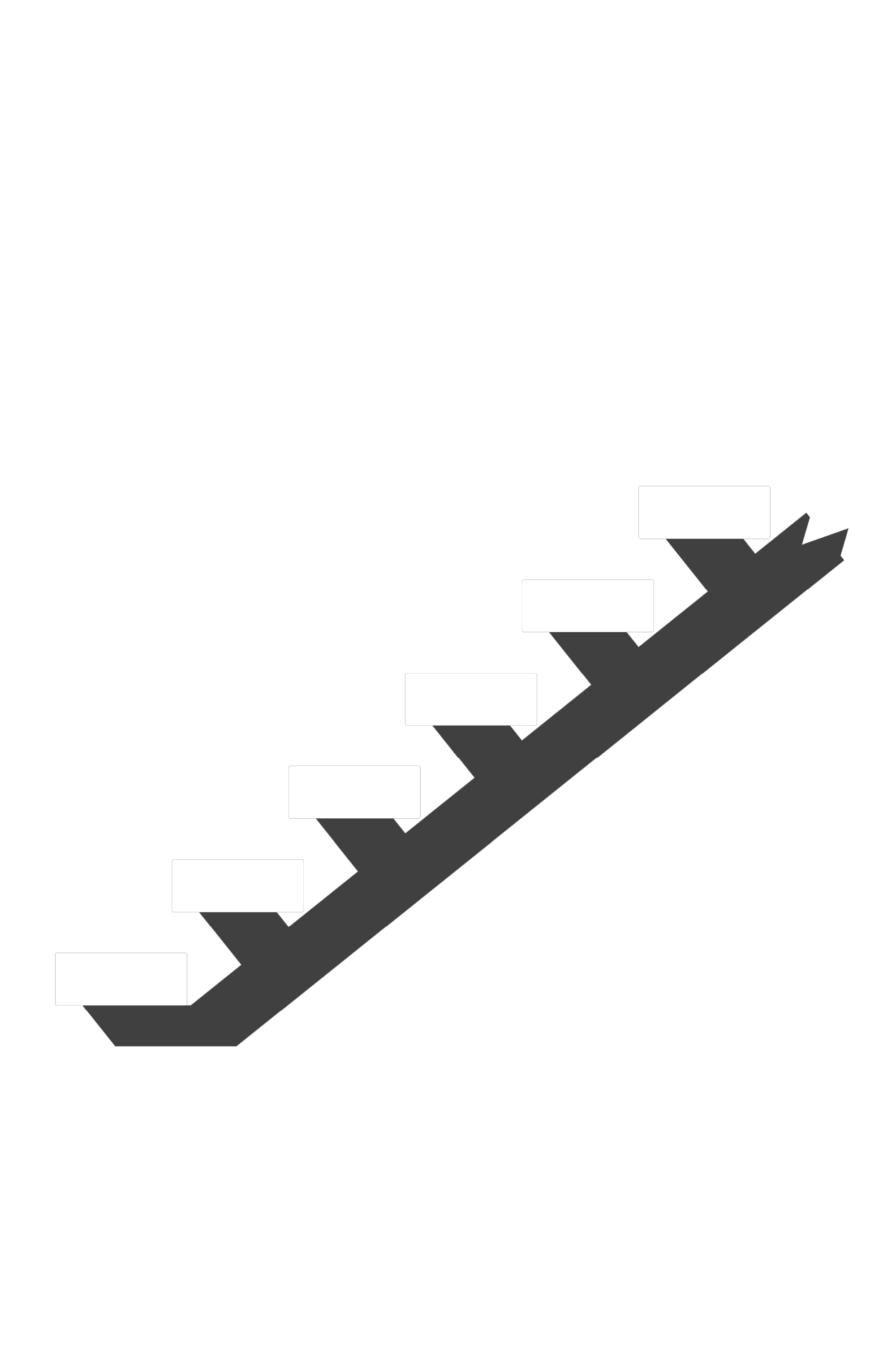
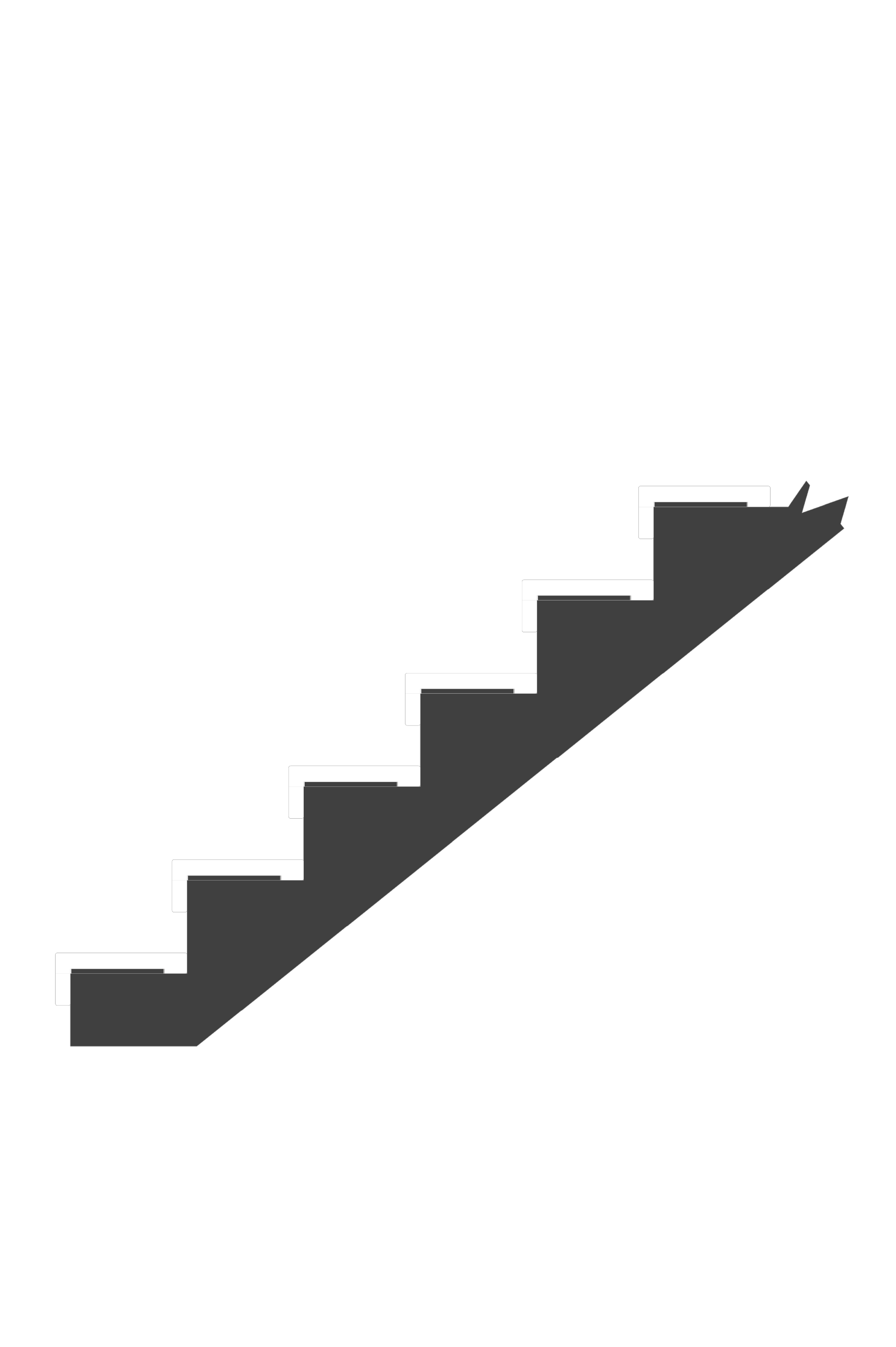
Featuring a central spine, the Flux Floating staircase delivers a sleek, minimalist design with the striking illusion of floating treads - without the complexity of a two-stage installation. Its open, airy construction allows natural light to flow freely, enhancing the sense of space and modern elegance.
%20(1).jpg)
■ Technical details
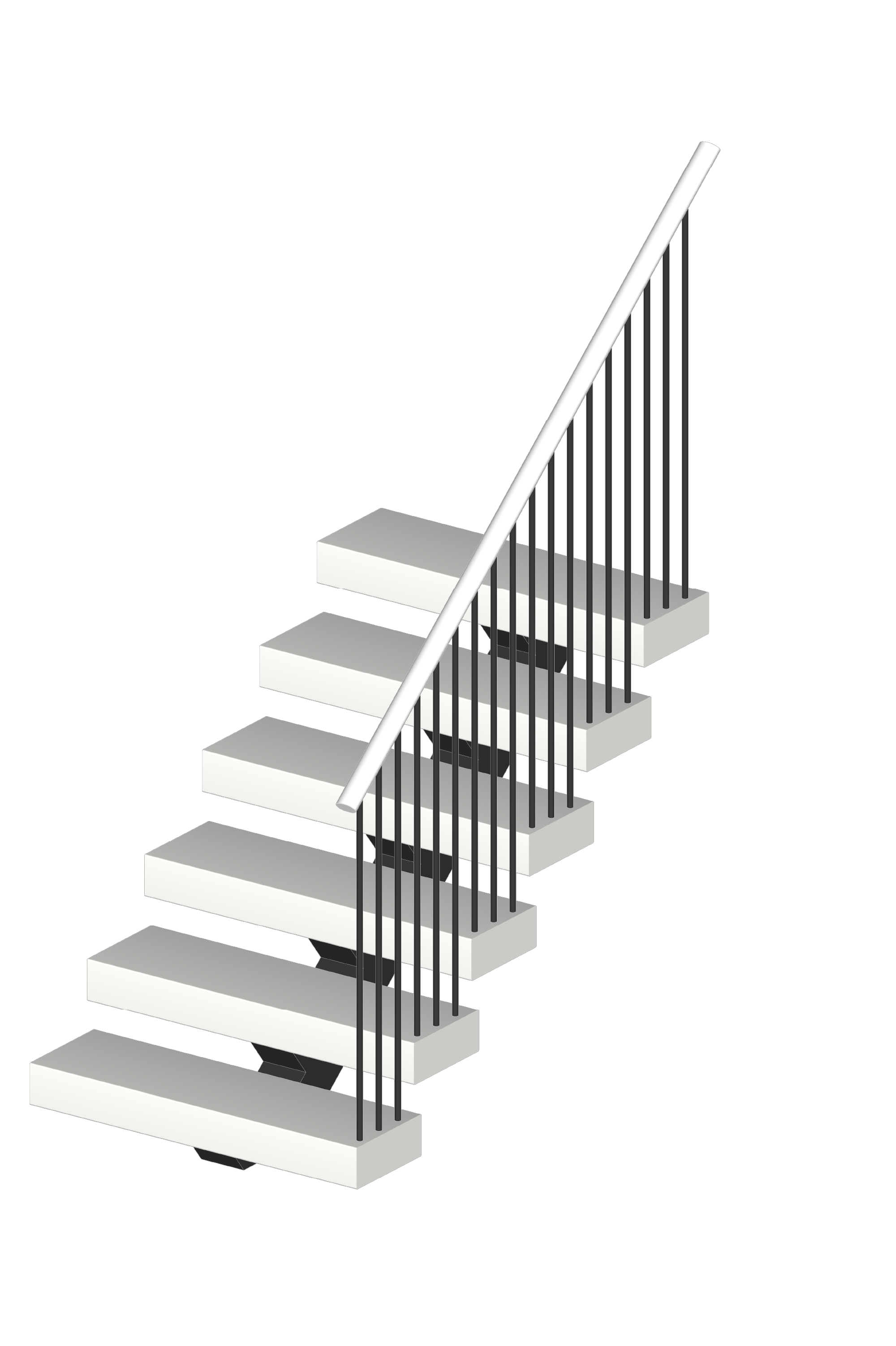
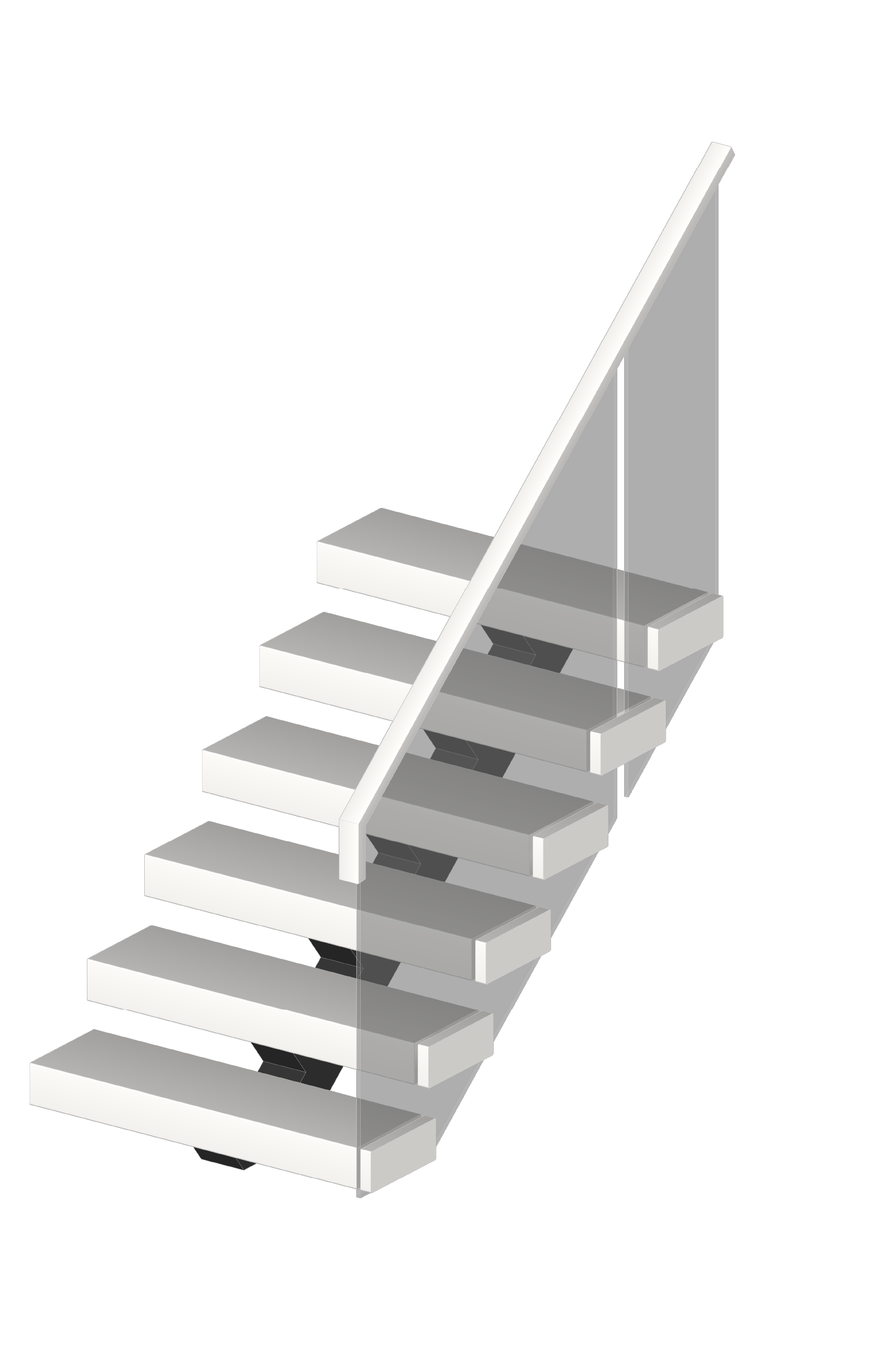
Balustrade Options

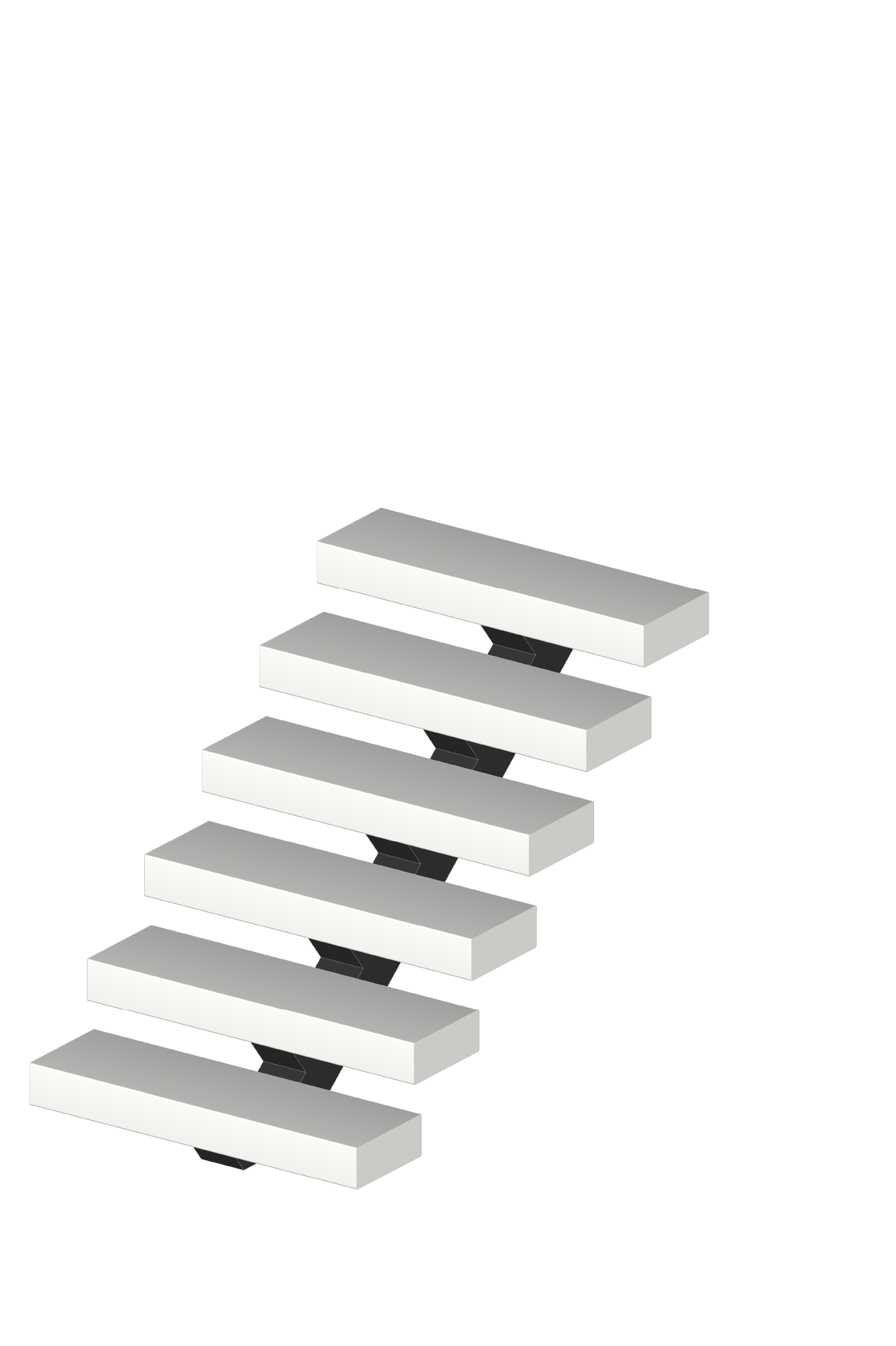
Tread Options

%20(1).avif)
.avif)
.avif)
.avif)
.avif)
.avif)
■
Flux - Central Spine
FAQs
What are the regulations for the space between treads on open risers?
Legally, the gap between treads must not exceed 100mm. And the good news is that any of our styles can have open treads!
How does the stair fit to the floor?
All our stringers feature a precision engineered foot plate for a secure connection. We recommend either fixing the staircase directly to the structural slab, or shuttering out a space where the staircase will connect and installing or pouring a concrete pad for it to sit on. The foot plate is designed with countersunk holes for heavy duty concrete screws, along with through-holes for chemical anchors where required. This dual fixing approach ensures a secure, rigid connection to the floor slab.
What style staircase can have open treads?
All of our styles can feature open treads, creating a visually light and elegant look. Open risers work best when there’s an open space or architectural feature behind, allowing light to flow and enhancing the sense of space. If there’s just a wall behind, the effect can feel heavy or dark — in this case, a closed tread design might be better and could also provide the opportunity for clever under-stair storage.
How is a central spine attached to the floor? Do we need additional support?
Our central spine staircases are engineered for strength and stability. At the base of the spine, we weld a substantial steel base plate that forms the structural anchor point. This plate is designed with countersunk holes for heavy duty concrete screws, along with through-holes for chemical anchors where required. This dual fixing approach ensures a secure, rigid connection to the floor slab.